
Braces vs Aligners in Vashi: Cost, Time, and What Actually Works
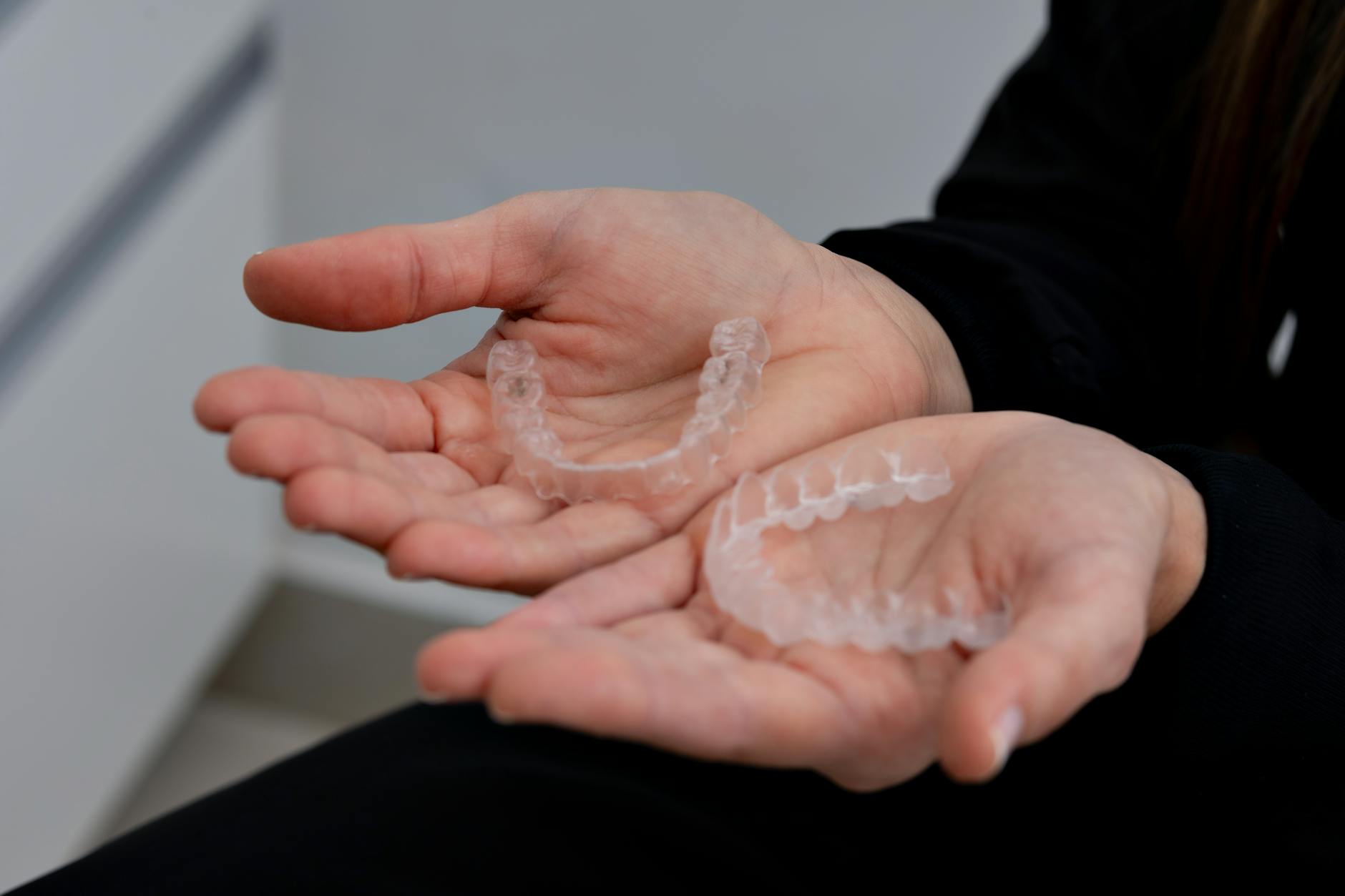
Most adults in Vashi who finally decide to straighten their teeth get stuck at the same fork: clean, invisible aligners that cost a small motorbike — or traditional braces that work everywhere but show up in every video call for the next two years. The honest truth is that one isn't "better" than the other. The right choice depends on what your teeth actually need, how much you can spend, and how disciplined you can be. Here is a straight comparison from Dr. Kajal Sharma, who handles both at Himalaya Dental House in Sector 17 Vashi.
For the treatment details on both options — the brands we fit, appointment frequency and aftercare — see our braces and aligners in Vashi service page.
Clear Aligners Cost in Vashi — What You're Actually Paying For
Clear aligners in Vashi average around ₹1,20,000 for a typical case, while Invisalign sits noticeably above that — averaging around ₹2,50,000 in Navi Mumbai. The actual number for your case depends on three things: how many trays you need (usually 14 to 40), the brand chosen, and whether attachments or mid-treatment refinements are part of your plan. Entry-level Indian brands like Whistle and Toothsi cost less because they're designed for milder cases and use fewer custom trays. Premium global brands like Invisalign use thicker proprietary plastic, more refined 3D scans, and have a longer clinical track record for complex movements. At Himalaya Dental House, Dr. Kajal Sharma examines your teeth, scans your bite, and only then quotes a fixed price — including the retainer cost after treatment ends. No surprise bills 18 months later.
Metal Braces Cost in Navi Mumbai — The Older, Cheaper Workhorse
Traditional metal braces in Navi Mumbai average around ₹35,000, and ceramic (tooth-coloured) braces average around ₹50,000. That's a fraction of what aligners cost, which is why braces still dominate teenage orthodontic care across Vashi and Navi Mumbai. The price usually covers the brackets, archwires, monthly adjustments for the full treatment period, and one set of retainers at the end. Self-ligating braces (the kind without elastic bands) sit a step above ceramic in price but cut down on appointment frequency. If budget is the deciding factor and your teeth need real correction — not just minor alignment — metal braces still deliver the most work per rupee in the orthodontic world. The cosmetic compromise is the price you pay for that value, and Dr. Kajal Sharma walks through the trade-off honestly during the in-person exam before any quote is given.
Invisalign vs Braces — What Actually Differs Day-to-Day
- Visibility. Aligners are nearly invisible. Even ceramic braces are noticeable up close.
- Comfort. Aligners are smooth plastic — no cuts on your cheek. Braces involve soreness after every monthly adjustment.
- Eating. Aligners come off when you eat. Braces have a long no-go list — popcorn, sticky chocolates, hard nuts, anything you bite into with your front teeth.
- Hygiene. Aligners come off for brushing and flossing — easier to keep teeth clean. Braces need special interdental brushes and patience.
- Complexity handled. Braces win for severe rotations, large gaps, and bite correction. Aligners excel at mild-to-moderate cases — newer protocols handle more than they used to, but not everything.
- Discipline required. Aligners only work if you actually wear them. Braces work whether you remember or not.
More important than the brand of aligner or type of brace is finding a dentist in Vashi who walks you through the trade-offs honestly — not one who steers you toward whichever option carries the higher margin.
Here's the catch with aligners that few clinics flag upfront: the American Association of Orthodontists recommends wearing them 20 to 22 hours every single day, for the full treatment span. You take them out for meals and brushing, and that's about it. People who skip the math and wear them 16 hours instead end up needing extra trays, longer treatment, and sometimes a complete re-scan. If you know you won't be disciplined, fixed braces are honestly a better use of your money.
How Long Will Treatment Take in Vashi?
Treatment time depends on how much your teeth need to move, not just which method you pick. That said, the typical ranges are clear: clear aligners take 6 to 18 months for mild-to-moderate cases, while traditional braces usually take 18 to 24 months — sometimes 30 months for complex bite work. For mild crowding, aligners are usually faster. For severe rotations or bite correction, braces and aligners take similar time, but braces give the orthodontist more direct mechanical control. At our Sector 17 Vashi clinic, Dr. Kajal Sharma builds a treatment plan that includes the expected duration before you commit. If you're shown a quote without a clear timeline anywhere, that's a red flag.
One more honest note — if you're someone who already forgets to take your daily vitamins, aligners will disappoint you. They live or die by your daily discipline. And before any orthodontic work starts, your gums need to be healthy, which is why we always finish a cleaning and check gum health before braces or trays go on. Skipping that step is the most common reason orthodontic treatment stalls halfway through.
Frequently Asked Questions
Q: How long do clear aligners take to straighten teeth?
A: For mild-to-moderate cases, clear aligners take 6 to 18 months — usually faster than braces, which run 18 to 24 months. But this only holds if you wear them 20 to 22 hours every day. Skip days, and treatment stretches out fast. Complex cases can take longer with either method.
Q: Are clear aligners as effective as traditional braces?
A: For mild-to-moderate misalignment, yes — modern aligner protocols handle the same cases braces do. For severe rotations, large gaps, or complicated bite problems, braces still hold an edge because they give the orthodontist direct mechanical control. Newer aligner systems with attachments are closing the gap, but braces remain the gold standard for the most complex work.
Q: Can adults get braces in Vashi or only teenagers?
A: Adults can absolutely get braces at any age. At our Sector 17 Vashi clinic, we treat plenty of patients in their 30s, 40s, and 50s. The treatment principles don't change with age — only the soreness between adjustments can feel slightly slower to settle in older adults.
Q: Is it painful to wear braces or aligners?
A: Both cause mild discomfort for the first few days, and again after each braces adjustment or new aligner tray. It feels like pressure or soreness, not sharp pain. Over-the-counter pain relief is usually enough. Aligners tend to be more comfortable day-to-day because there are no brackets to rub against your cheeks.
Q: Can I switch from braces to aligners halfway through treatment?
A: Sometimes, but it depends on your case and how far treatment has progressed. Switching mid-treatment usually adds time and cost. Dr. Kajal Sharma will tell you upfront whether your case allows it. The cleanest path is to choose carefully at the start — which is exactly what the first consultation is for.
Thinking About Straightening Your Smile?
Book a consultation at Himalaya Dental House in Sector 17 Vashi. Dr. Kajal Sharma will examine your teeth, walk you through both options with honest timing and cost, and tell you which one actually fits your case. No pressure to commit on the spot. Shop No. 42, JK Chambers Building, Plot No. 76, Sector 17, Vashi, Navi Mumbai 400703. Call us anytime — we'll book your appointment for whenever suits you best.