
Implantologist in Vashi: A Real Dental Implant Case, Start to Finish
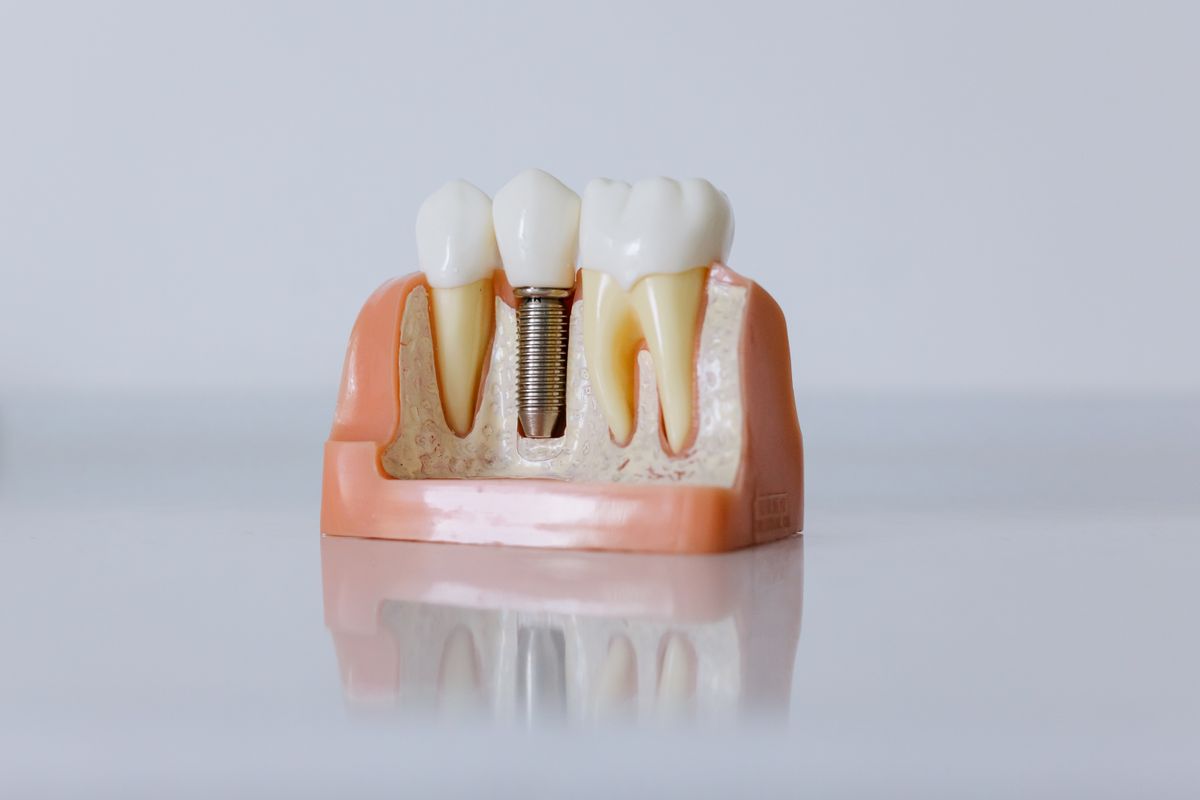
When you lose a back tooth, you stop noticing your smile and start noticing your dinner. Chewing shifts to the other side, that side gets overworked, and meals turn into a quiet negotiation. This is a real case from Dr. Kushal Sharma, implantologist at Himalaya Dental House in Sector 17 Vashi — a patient who came in unable to chew comfortably on the lower-left side, and walked out months later with a fixed, working set of back teeth again.
The Problem: A Chewing Side That Had Stopped Working
The patient, a woman in her working years, came to our Vashi clinic with a simple complaint — she could not chew properly on the lower-left side, and one back tooth area felt empty and sore. On examination, the picture was more involved than a single missing tooth. Three teeth in that region were in trouble. The first showed decay along its back edge. The two molars behind it were badly broken down by deep decay, with very little healthy tooth structure left to work with.
A digital X-ray told us how far things had gone. On the first tooth, the decay was creeping close to the pulp — the soft nerve and blood-vessel core inside the tooth. That tooth was worth saving. The two molars behind it were a different story: too little solid tooth remained to support a filling or a crown, so the long-term outlook for keeping them was poor. In dental terms, they were non-restorable. Trying to patch them would only have delayed the inevitable and cost the patient more in the long run.
The Plan: Save What We Could, Replace What We Couldn't
Good implant work starts with a clear plan, not a drill. The treatment split into two halves. For the salvageable front tooth, where decay was approaching the nerve, we planned a root canal followed by a full-coverage crown — that removes the infected tissue, then caps and protects what's left so the tooth keeps doing its job for years. For the two broken-down molars with no future, the plan was extraction followed by dental implants to replace them with fixed, natural-feeling teeth.
Saving a tooth and replacing a tooth are two different skills, and the order matters. The root canal on the front tooth let us keep a natural root in the mouth rather than turning the whole region into implant work. The aim with any implant case is to remove only what truly cannot be saved — and rebuild the rest so the bite is balanced again.
Extraction and Same-Visit Implant Placement
For the two failing molars, we used immediate implant placement. That means the tooth is removed and a titanium implant is placed into the same socket in the same sitting, rather than taking the tooth out, waiting months for the gap to heal, and operating a second time. When the bone around the socket is healthy enough to hold the implant securely, this approach reduces the number of surgical visits and shortens the overall timeline. It is a judgement call made on the day, based on what the bone actually looks like once the tooth is out — not something promised in advance.
The implants themselves are small titanium posts that take the place of a natural tooth root. Over the following weeks, bone grows onto and around the implant surface in a process called osseointegration — essentially the body accepting the implant as part of the jaw. This is the part that cannot be rushed. It is also why an implant, once fully healed, can handle the force of chewing the way a real back tooth does.
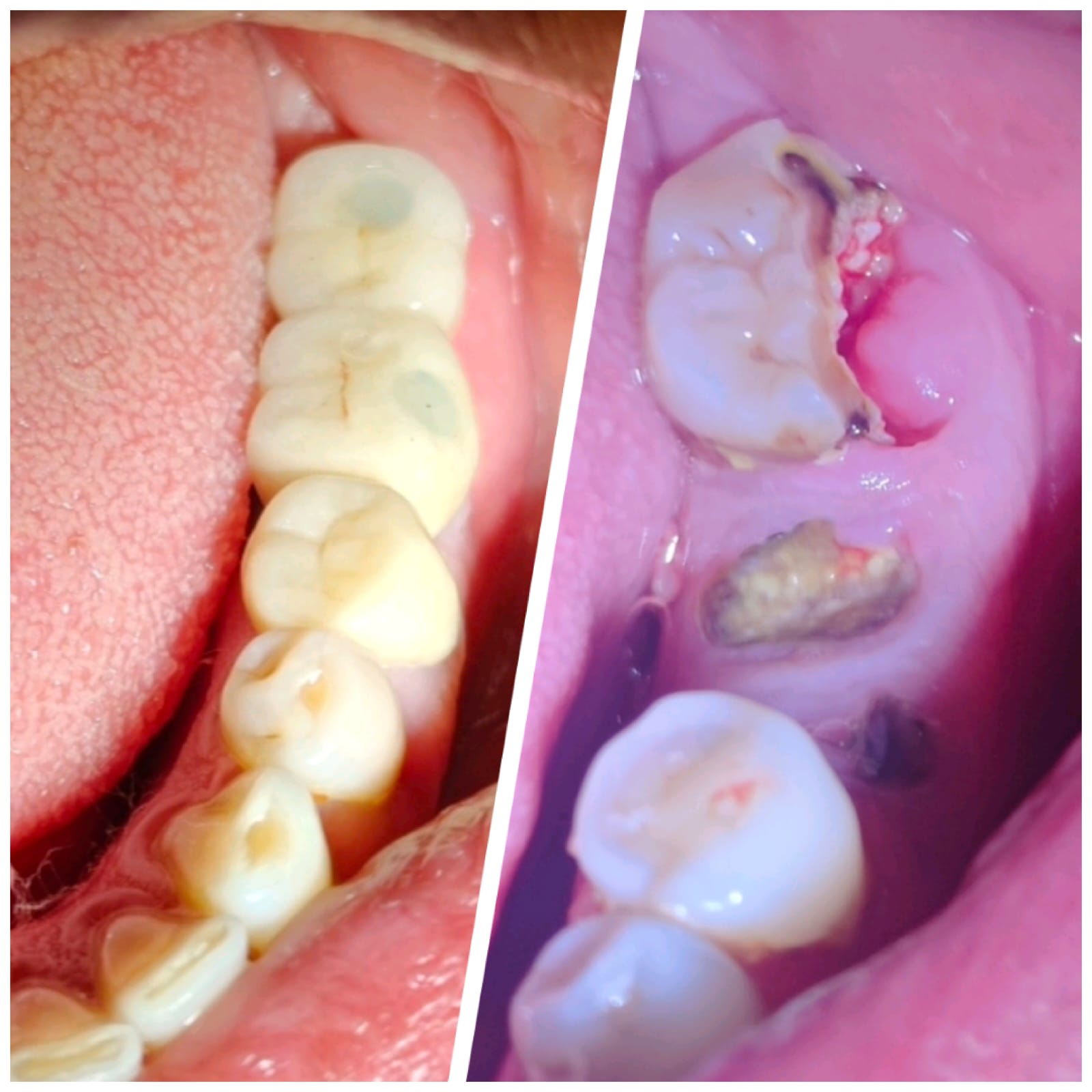
After roughly two months of healing, we checked the implants both by hand and on X-ray. Both had integrated well — solid, stable, and ready to carry a tooth. Only then did we move to the final teeth.
The Result: A Fixed, Functional Chewing Side Again
With the implants integrated, we took a digital intraoral scan — a quick wand that maps the mouth in 3D, no putty trays — and planned the final teeth around the patient's natural bite. The molars were restored with screw-retained porcelain-fused-to-metal teeth. In plain language: the new teeth are fixed onto the implants with a screw rather than glued, which means we can remove and re-tighten them cleanly if they ever need servicing. Porcelain on the outside gives a natural look; the metal core gives the strength a back tooth needs.
The front tooth got its root canal and crown, the two molars got their implant teeth, and the bite came back together. The patient could chew on that side again — function, appearance, and comfort restored with fixed teeth rather than something removable. For anyone weighing up what this kind of work involves, our guide to dental implant cost in Vashi walks through the pricing side in detail.
Why This Case Is an Implantologist's Job
This case had several moving parts — deciding which teeth to keep, removing teeth without damaging the bone needed to anchor an implant, placing implants at the right angle and depth, and planning final teeth that share the bite evenly. As a dental implantologist, Dr. Kushal Sharma focuses on exactly this kind of tooth-replacement work day in and day out. Seeing an implantologist in Vashi for missing or failing back teeth means the surgical planning, the placement, and the final restoration are handled by someone who does this routinely. Not every dental clinic has a dedicated implantologist on staff — it's a fair thing to ask about when you're choosing where to have implant work done.
Frequently Asked Questions
Q: What does an implantologist do that a general dentist might not?
A: An implantologist is a dentist who concentrates on replacing missing teeth with dental implants — the surgical placement of the implant into the jaw and the planning that goes with it. At Himalaya Dental House in Sector 17 Vashi, Dr. Kushal Sharma handles implant cases from the initial assessment and extraction through to the final fixed teeth.
Q: Can a badly decayed back tooth be replaced with an implant?
A: Often, yes. When a molar is too broken down by decay to save with a filling or crown, it can be removed and replaced with a dental implant. The implant acts like a new tooth root and supports a fixed crown that handles chewing. Whether it's suitable depends on the bone in that area, which an implantologist checks on a scan.
Q: What is immediate implant placement?
A: Immediate implant placement means the failing tooth is removed and the implant is placed into the same socket in the same visit, instead of waiting months between the two. It can reduce the number of surgeries when the surrounding bone is healthy enough to hold the implant securely. It's a decision made during the procedure, based on the actual condition of the bone.
Q: How long does the full implant process take?
A: In this case, the implants were left to heal and integrate with the bone for about two months before the final teeth were fitted. Timelines vary from person to person depending on healing, bone quality, and how many teeth are involved. Your implantologist gives a realistic schedule after examining you.
Q: Does getting an implant for a back tooth hurt?
A: The procedure is done under local anaesthetic, so the area is numb during treatment, and modern techniques are designed to keep discomfort to a minimum. Most patients manage afterwards with standard pain relief. If you're anxious about it, mention that at your consultation so the team can talk you through what to expect.
Q: How much does a dental implant cost in Vashi?
A: Implant pricing depends on how many teeth are involved, the condition of the bone, and the final restoration — so Dr. Kushal Sharma examines the area first and then gives a clear quote at the consultation. You can read our dedicated dental implant cost guide for Vashi for a fuller breakdown.
Missing or Failing Back Teeth? Talk to an Implantologist in Vashi
If chewing has become a problem on one side, or you've been told a tooth can't be saved, book a consultation with Dr. Kushal Sharma at Himalaya Dental House, Shop No. 42, JK Chambers Building, Sector 17, Vashi, Navi Mumbai 400703. You'll get a clear assessment of what can be saved, what needs replacing, and what the plan looks like — before anything is done.