
Veneers vs Crowns in Vashi: Which One Does Your Tooth Actually Need?
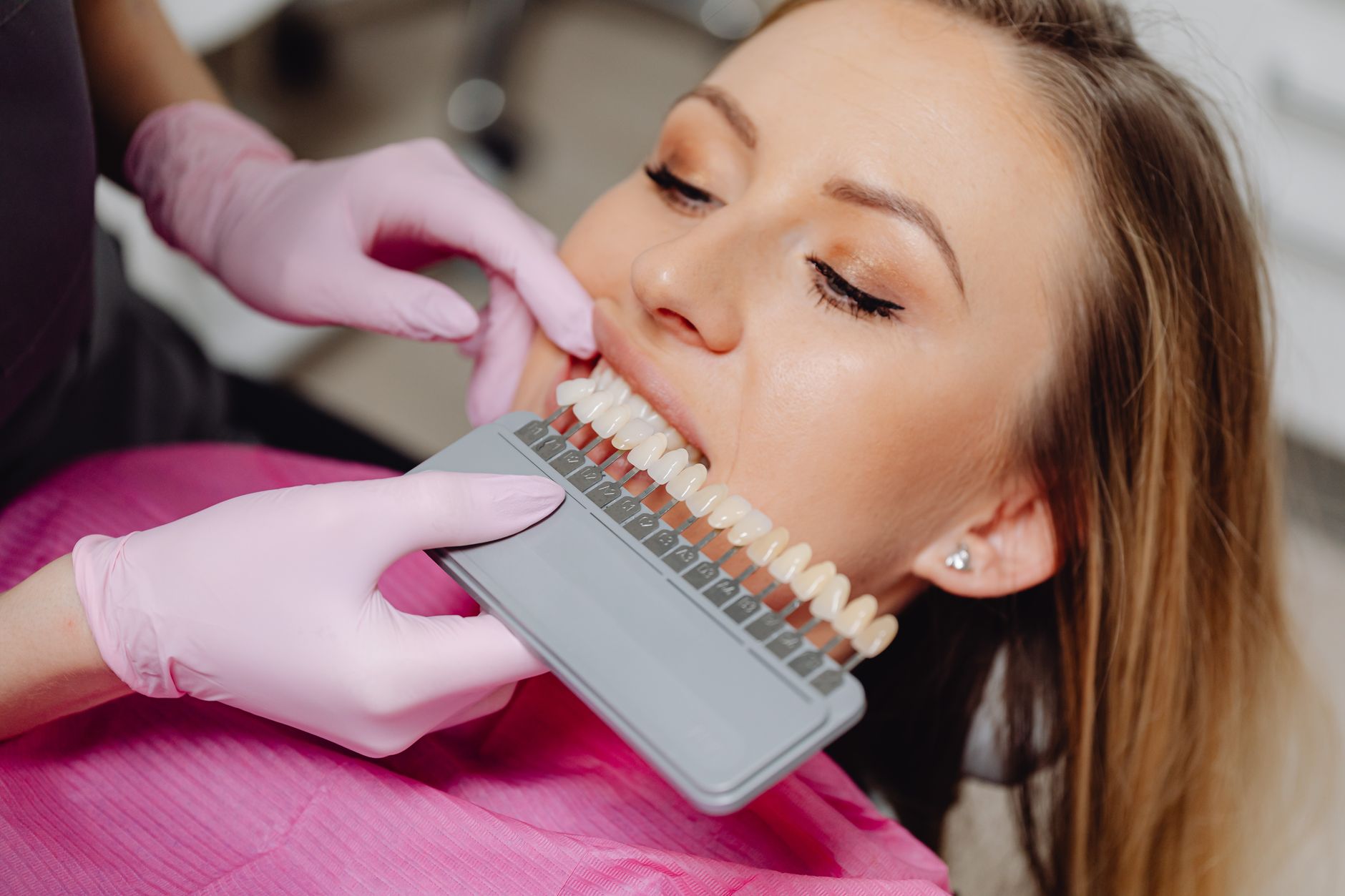
You chipped a front tooth on a kebab stick. Or you cracked a molar biting into something you shouldn't have. Or you just had a root canal and your dentist mentioned the tooth needs "covering". Either way, you've now been given two options — a veneer or a crown — and you're trying to figure out which one your tooth actually needs before paying anywhere around ₹15,000 or more. Here is a straight breakdown from Dr. Kajal Sharma at Himalaya Dental House in Sector 17 Vashi.
Porcelain Veneers vs Crowns — What's Actually Different
The simplest way to remember it: a veneer covers the front of a tooth, a crown covers the whole tooth. A veneer is a thin shell of porcelain or composite — about 0.5 mm thick — bonded to the front surface of a tooth to fix its appearance. A crown is a full cap that goes over the entire tooth, holding it together structurally. That single difference drives everything else. Veneers are mostly cosmetic, used when the tooth itself is healthy but looks chipped, discoloured, gappy, or misshapen. Crowns are structural — they're used when the tooth is too damaged, decayed, or weakened to survive on its own, and need full coverage to keep functioning.
When veneers or crowns are combined with whitening or alignment as a full cosmetic plan, that's a smile makeover — our smile makeover in Vashi service page walks through how those treatments come together.
Dental Crown Cost in Vashi — By Material
Crown cost in Vashi depends almost entirely on the material chosen. Porcelain-fused-to-metal (PFM) crowns are the most affordable option, averaging around ₹10,000 per tooth — they have a metal base for strength and porcelain on the outside for appearance. They work well for back teeth but can show a faint grey line at the gum over time, which is why they're not ideal for front teeth. All-ceramic and E-max crowns average around ₹14,000 per tooth — they look more natural because there's no metal underneath, making them the standard pick for front teeth. Zirconia crowns average around ₹16,500 per tooth, with premium multi-layer zirconia averaging closer to ₹22,500 — they're the most durable, almost unbreakable, and look natural under most lighting. None of these figures are your actual quote. Dr. Kajal Sharma examines the tooth in person, recommends a material based on where it sits and how hard you bite, and only then quotes a fixed price for your case — including the lab work.
Zirconia vs Ceramic Crowns — The Material Decision
If you've narrowed down to a non-metal crown, the choice is usually between full-zirconia and all-ceramic (E-max). Zirconia is harder and more chip-resistant, so it's the safer pick for back teeth, people who clench or grind, and anyone who's already cracked a crown once. E-max gives a slightly more translucent, lifelike appearance because the material lets light through similar to real enamel — so it's often preferred for the very front teeth where appearance matters most. Most patients at our Sector 17 Vashi clinic end up with zirconia on molars and E-max on front teeth. That combination usually gives the best of both worlds without overspending on either.
On the veneer side of the comparison, we broke down porcelain vs composite veneers — material, cost, longevity — in detail in the smile makeover post. The short version: porcelain veneers average around ₹32,500 per tooth, composite veneers around ₹17,500. Composite is same-day and shorter-lived (5–7 years); porcelain takes two visits and lasts much longer.
On the longevity side, the numbers favour crowns. Clinical studies tracking dental crowns over time show roughly 95% are still fully functional at 10 years, dropping to about 70 to 85% at 15 years — and many crowns last well over 20 years with normal care. Porcelain veneers run shorter: about 95% functional at 10 years, 85% at 15 years. Composite veneers are the shortest, usually replaced every 5 to 7 years. If you want maximum longevity, crowns win. If preserving more of your natural tooth structure matters more, veneers win.
How to Tell Which One You Actually Need
A veneer is usually right when the tooth is structurally sound but cosmetically off — a chip on the corner, slight discolouration, a small gap, or a slightly uneven shape. A crown is usually right when the tooth has lost significant structure: a large old filling that's failing, a deep cavity that's eaten away the side of the tooth, a crack running through the tooth, or a tooth that's just had root-canal treatment (which makes it brittle and prone to fracture). One honest test — if more than half the visible tooth has been ground away, replaced with filling, or cracked, you almost certainly need a crown, not a veneer. The veneer won't have enough healthy tooth to bond to securely.
Frequently Asked Questions
Q: When do I need a crown and not a veneer?
A: You need a crown — not a veneer — when the tooth has lost significant structure: large failing fillings, deep decay, cracks, or after root canal treatment. Veneers only work when there's enough healthy enamel for the shell to bond to. As a rough rule, if more than half the visible tooth is missing or replaced, you're in crown territory.
Q: How long do dental crowns last?
A: Clinical studies show about 95% of dental crowns are still fully functional at 10 years, dropping to roughly 70–85% at 15 years. Many last 20+ years with normal care. Material matters: zirconia and PFM crowns tend to outlast all-ceramic ones, but all-ceramic looks more natural up close.
Q: Do I need a crown after a root canal?
A: Almost always, yes — especially for back teeth. A root-canal-treated tooth has had its nerve and blood supply removed, which makes it more brittle over time. A crown caps the tooth and protects it from fracturing. Skipping the crown is the most common reason a successful root canal fails years later.
Q: Will a crown or veneer look fake?
A: Not if matched properly. Both can look indistinguishable from natural teeth when the dentist matches the shade carefully and uses a quality lab. The most common reason restorations look fake is choosing a shade that's whiter than your natural teeth — which the dentist should warn you about before fabrication. At our Sector 17 Vashi clinic we always do a shade match in natural light before sending to the lab.
Q: How many visits does each take in Vashi?
A: A porcelain veneer or all-ceramic crown takes two visits at our Sector 17 Vashi clinic: the first for preparation and impression, the second for fitting about 2 weeks later. Composite veneers can be done in a single visit. Same-day crowns using CAD/CAM milling are possible in some cases but aren't always the most cost-effective choice.
Veneer or Crown — Still Not Sure?
Book a consultation at Himalaya Dental House in Sector 17 Vashi. Dr. Kajal Sharma will examine the tooth, show you what's actually possible with each option, and give you an honest recommendation along with a fixed quote — including the lab and material costs. No pressure to commit on the spot. Shop No. 42, JK Chambers Building, Plot No. 76, Sector 17, Vashi, Navi Mumbai 400703. Call us anytime — we'll book your appointment for whenever suits you best.